
Thermal Expansion Tank: When a Water Heater Needs One
Updated
Get a free quote
A licensed plumber replies with a price. Nothing is booked until you say yes.
Rather talk? Call (608) 927-6750 or text us.
Short answer
Part of Tankless Water Heaters.
Water gets bigger when it gets hot. In an open system the extra water backs up into the street main. In a closed system it has nowhere to go, and the pressure rises every time the heater runs. That pressure can wear on fixtures and can set off the heater's relief valve. It is one of the questions a plumber covers during water heater installation of a tank-style unit.
What Wisconsin code says
SPS 382.40(3)(c) says any water heater, except an instantaneous non-storage water heater, serving a closed water system must be provided with an expansion tank or other approved device having a similar function to control thermal expansion (SPS 382.40). Instantaneous means tankless. A storage water heater on a closed system needs the device.
What a closed water system is
A closed system is one where water cannot flow backward into the main. Things that close a system include:
- A check valve or backflow preventer on the incoming line.
- A pressure reducing valve, which also blocks backward flow in many designs.
- A meter set with a built-in check valve, depending on the utility.
Many homes built decades ago had open systems. Over time, a pressure reducing valve or a new meter setup may have been added, which closes the system without anyone noticing. The high water pressure guide explains the 80 psig rule that often puts a reducing valve in a house. Beloit's housing is old, with a median year built of 1957, so many homes have had at least one change like this.
Signs you might need one
- The relief valve on the water heater drips or spits after a heating cycle (see the relief valve guide).
- The pressure at a hose bib rises when the heater fires and falls when it stops.
- Banging or humming when the heater shuts off (see the water hammer guide).
- Faucets or fill valves that wear out faster than expected.
A gauge on a hose bib shows the swing. Read it with the heater idle, then again while it heats.
What a thermal expansion tank is
It is a small tank, usually mounted on the cold line near the heater, with a rubber bladder inside. Air sits on one side of the bladder and house water on the other. As heated water expands, it pushes into the tank and compresses the air. The tank gives back that water as pressure falls. A plumber sets the air charge to match the home's water pressure before the tank goes in, which is why a gauge reading matters.
Why it comes up at replacement time
Swapping a water heater is a common time to add or replace an expansion tank, since the lines are already open. An old tank that has lost its air charge or has a failed bladder stops working, and the symptoms return. A plumber can check it by tapping or by testing the air valve.
The City of Beloit requires a permit before any plumbing work. Call Planning and Building Services at (608) 364-6700 to confirm what your job needs (City permit page). A water heater swap that adds a tank counts as plumbing work. See the water heater permits guide for the full picture.
What it costs
A tankless unit, which does not need an expansion tank, runs $1,404 to $3,904 installed (Angi tankless water heater cost guide). A standard tank unit runs $881 to $1,826 (HomeAdvisor water heater cost guide). The cost of the expansion tank itself is not broken out in those guides, so ask for it as a line in the written quote. The plumber cost page shows how to read a quote.
Tank-style heaters and tankless units
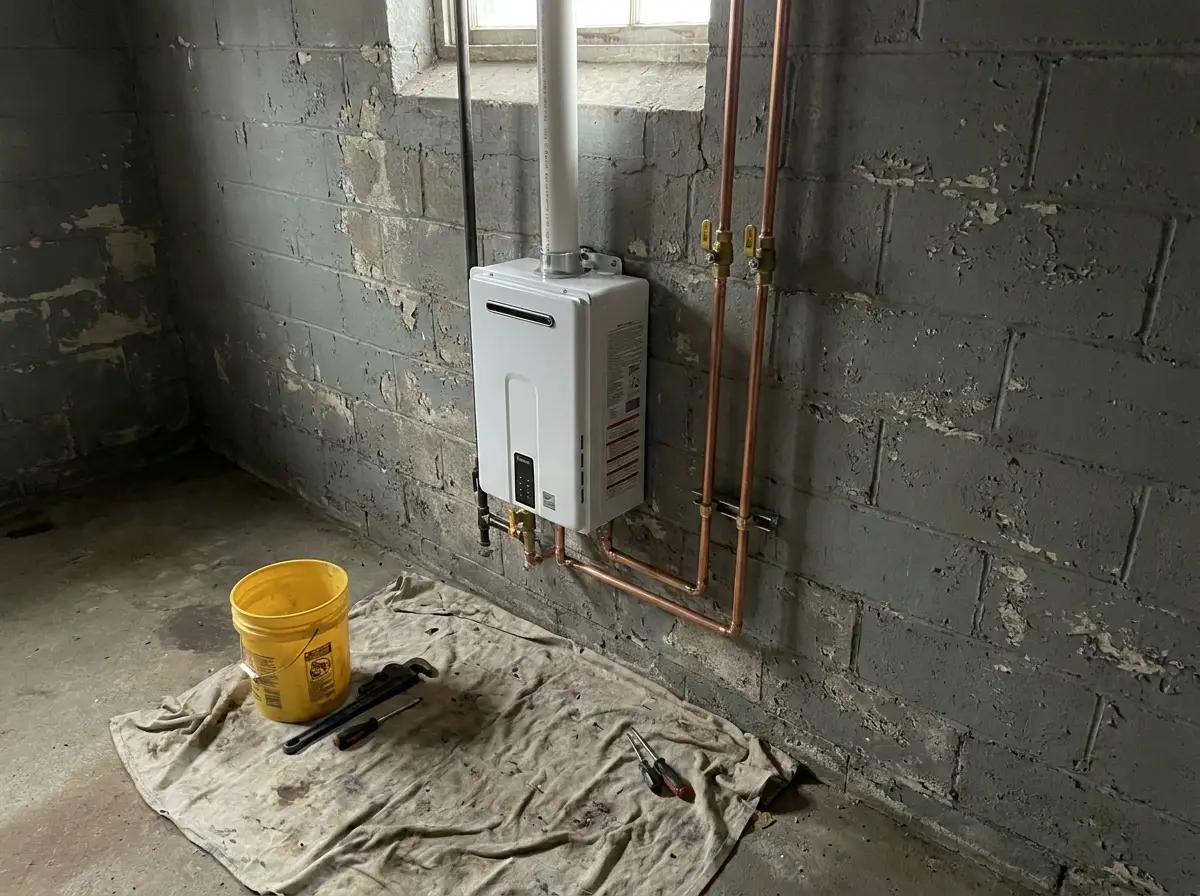
A storage heater holds a fixed volume of water and heats all of it. The water expands as it warms. A tankless unit heats water as it moves through, so the water does not sit and expand in a tank. That is why the code carves out instantaneous heaters. It does not mean a tankless install is free of other rules, since venting, gas supply, electric load and relief devices still apply. A plumber reviews each when quoting a switch.
Questions to ask the plumber
- Is my water system closed, and how did you check?
- Is there already an expansion tank, and is the air charge correct?
- What is the pressure at a hose bib before and after the heater runs?
- Will the quote list the tank as its own line item?
- Does my reducing valve need to be tested at the same time?
A plumber who checks pressure first and writes down the numbers is giving you something you can check later. Keep the readings with your home records.
Checking an existing tank
If a tank is already installed, it can still fail. The air charge can leak out over time, and the bladder can tear. With the water off and the tank drained, a plumber checks the air valve with a gauge, the same way you check a tire. Water coming out of the air valve means the bladder has failed and the tank needs to be replaced. Many failed tanks hang quietly on the pipe for years while the relief valve does the work they should be doing.
That is why a dripping relief valve on a house that already has an expansion tank is still worth a look. The valve may be fine and the tank may be the problem. The check takes a few minutes during a service visit and does not usually add much to the bill.
Related questions
The sizing and type of heater are covered in the water heaters section on the home page. For the right tank size for your household, use the sizing guide. Send the details of your heater and your pressure readings through the quote form, and a licensed plumber can say whether your system is closed and whether a tank is already in place.
Want a price for your own house?
Call, text, or send the form. You get a price back before any work is scheduled.
Quick answers
Does Wisconsin require a thermal expansion tank?
SPS 382.40(3)(c) requires an expansion tank or another approved device on any water heater, except an instantaneous one, that serves a closed water system.
What is a closed water system?
It is a system where heated, expanded water cannot flow back into the street main, often because of a check valve or a pressure reducing valve on the supply line.
Why does my water heater relief valve drip?
Thermal expansion in a closed system is a common cause, along with high pressure or a worn valve. An expansion tank gives the extra water somewhere to go.
Does a tankless water heater need an expansion tank?
The code excludes instantaneous non-storage water heaters from the expansion tank rule. A plumber will confirm what a specific model needs.
How do I know if my expansion tank has failed?
A waterlogged tank may feel heavy or full of water when tapped, and the relief valve may start dripping again. A plumber can test the air charge.
How much does a new water heater cost?
A standard tank water heater typically runs $881 to $1,826 installed, and a tankless unit $1,404 to $3,904. See the cost page for details.
Want a plumber to look at it?
Describe the problem and the town. A licensed plumber replies with a price before any work starts.
Prices and the full service list are on the homepage for a plumber in Beloit.