
High Water Pressure at Home: Limits and Signs
Updated
Get a free quote
A licensed plumber replies with a price. Nothing is booked until you say yes.
Rather talk? Call (608) 927-6750 or text us.
Short answer
Part of Leak Detection.
High pressure rarely announces itself. It wears out fixtures, strains pipe joints and hides inside problems that look like something else, which is why it comes up in leak detection visits. This guide covers the state limit, the signs, a simple test and what a fix involves.
What Wisconsin code says about 80 psig
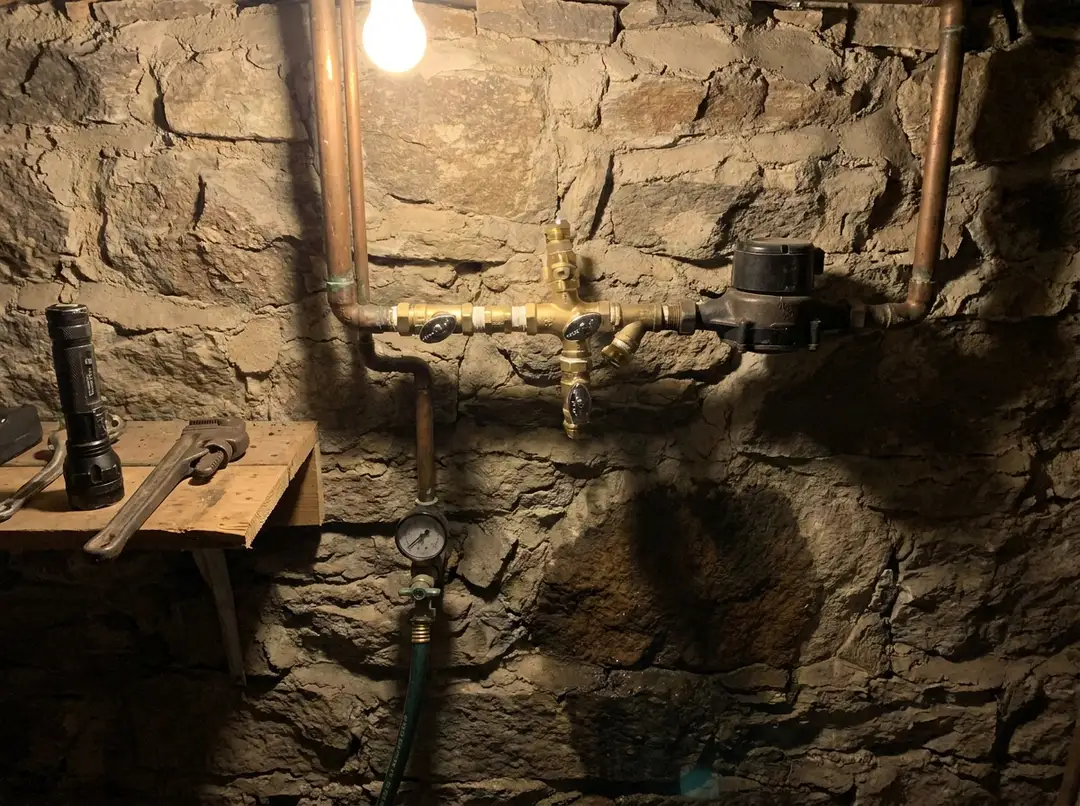
Under SPS 382.40(7)(d)2, if the water pressure available from a water main or private supply exceeds 80 psig, a pressure reducing valve and strainer must be installed in the distribution system. If a strainer is not part of the valve, it is installed separately (SPS 382.40(7)(d)). The valve goes downstream of the utility meter and upstream of the fixtures, so the whole house sees the reduced pressure.
PSIG means pounds per square inch, gauge. It is the same reading your gauge will show. The City of Beloit and the other nearby utilities each run their own system, so the number at your tap depends on where the house sits and what the system is doing that day.
Signs of high water pressure
Many of these signs have other causes, so treat them as a reason to test, not as proof:
- Banging or humming pipes when a tap shuts (see the water hammer guide).
- A faucet or toilet fill valve that drips or runs soon after it is repaired.
- Supply hoses to the washer or dishwasher that bulge or burst.
- A water heater relief valve that drips (see the relief valve guide).
- Shower heads that spray hard and spatter.
- Pin-hole leaks or joint leaks showing up in more than one place.
How to test your pressure with a gauge
A hose-thread pressure gauge is a common tool that threads onto an outdoor hose bib or a laundry tub faucet. The general steps:
- Shut off every fixture and appliance that uses water, so nothing is drawing from the system.
- Thread the gauge onto the hose bib closest to where the water enters the house.
- Open the bib fully and read the needle.
- Repeat at a different time of day, since pressure can change over the day.
Write down each reading. A number above 80 points to a missing or failing reducing valve. A needle that creeps upward after the bib is closed can mean the system has no way to relieve the extra pressure (see the expansion tank guide).
Where the pressure reducing valve goes
On most homes, the valve sits on the main line close to where it comes in, after the meter and the shutoff. The code puts it downstream of the meter and upstream of fixtures (SPS 382.40(7)(d)). If your house already has a bell-shaped valve near the main shutoff, it may be set too high or worn out. Ask the plumber to read the pressure before and after it.
Pressure and the fees and permits that follow
Replacing a valve is plumbing work. In the City of Beloit, the plumbing code requires a permit before any plumbing work, so call Planning and Building Services at (608) 364-6700 to confirm what your job needs (City permit page). A permit for a single fixture is $7 plus a $50 filing fee under the 2026 Schedule of Fees. Costs for the work itself vary, and the plumber cost page explains how prices are built.
Why high pressure and water heaters go together
A tank water heater adds heat to water that cannot expand into the street. When the house pressure is already near the limit, the extra from heating pushes the relief valve open. A reducing valve fixes one half of that picture and an expansion tank fixes the other, so plumbers often look at both at once. The valve in the middle of the system is also one reason a closed system exists, which is explained in the thermal expansion tank guide.
What a fix involves
If there is no reducing valve, a plumber installs one on the main line after the meter and the shutoff. If one is already there, the plumber measures pressure on both sides. A reading above 80 on the house side means the valve is set too high, worn out or stuck. Many reducing valves can be adjusted with a screw and a wrench. Others need to be replaced. After the work, the plumber should leave you with a final reading so you can see the change.
Pressure is one of the few plumbing problems you can measure yourself, so keep a record. A reading in the weeks after the fix tells you whether the valve is holding steady. The City water office or the utility that serves your address can say whether the supply pressure in your area is known to run high.
Low pressure is a different problem
Some homes have the opposite trouble: weak flow at the shower or the far end of the house. That points to a clogged strainer, a partly closed valve, scale or old pipe, not to a reducing valve set too high. The galvanized pipe guide covers one common cause in older Beloit homes. A gauge reading separates the two problems quickly, which is why it is worth taking before anyone changes anything.
When to call a plumber
- The gauge reads above 80 psig at any point.
- You find a reducing valve that is leaking or noisy.
- Hoses, supply lines or fixtures keep failing sooner than they should.
- Pipes bang every time a tap or a machine shuts off.
Bring the readings with you. Send them with your address through the quote form and a licensed plumber can say whether a valve is already in place, whether it needs setting, or whether one is missing.
Want a price for your own house?
Call, text, or send the form. You get a price back before any work is scheduled.
Quick answers
What is the maximum water pressure allowed in a home in Wisconsin?
State code requires a pressure reducing valve and strainer when available pressure from the main or a private supply exceeds 80 psig. The valve goes downstream of the meter and upstream of the fixtures.
How do I test water pressure at home?
Thread a pressure gauge onto an outdoor hose bib with all fixtures off, open the bib and read the needle. Test at more than one time of day, because pressure can change.
What are the signs of high water pressure?
Banging pipes, dripping faucets, bulging supply hoses, a dripping water heater relief valve and several small leaks are all common signs. A gauge reading is the only way to confirm the number.
Can high water pressure damage a water heater?
Extra pressure, together with the expansion of heated water, can push the relief valve open again and again. A reducing valve and an expansion tank, when needed, address the cause.
Where is the pressure reducing valve located?
It sits on the main water line after the meter and before the fixtures, usually near where the line enters the house. A plumber can find and test it.
Do I need a permit to replace a pressure reducing valve in Beloit?
The city plumbing code requires a permit before any plumbing work. Call Planning and Building Services at (608) 364-6700 to confirm what your job needs.
Want a plumber to look at it?
Describe the problem and the town. A licensed plumber replies with a price before any work starts.
Prices and the full service list are on the homepage for a plumber in Beloit.